
Published on 29/04/2026
Looking back at the Netural AI Symposium | Part 1 of 3
Topics
- Events
- Insights

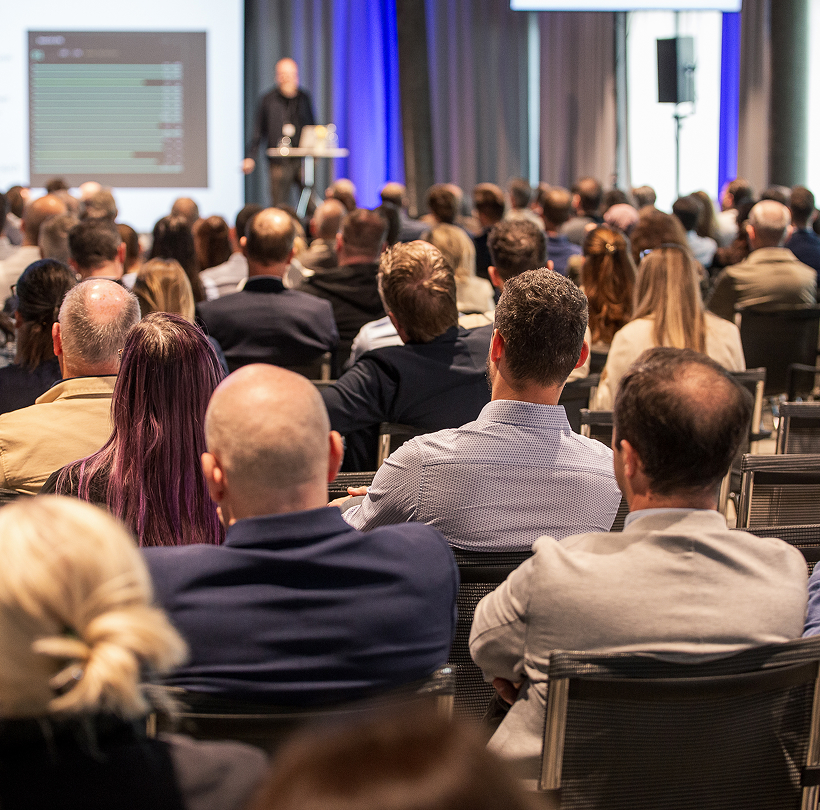
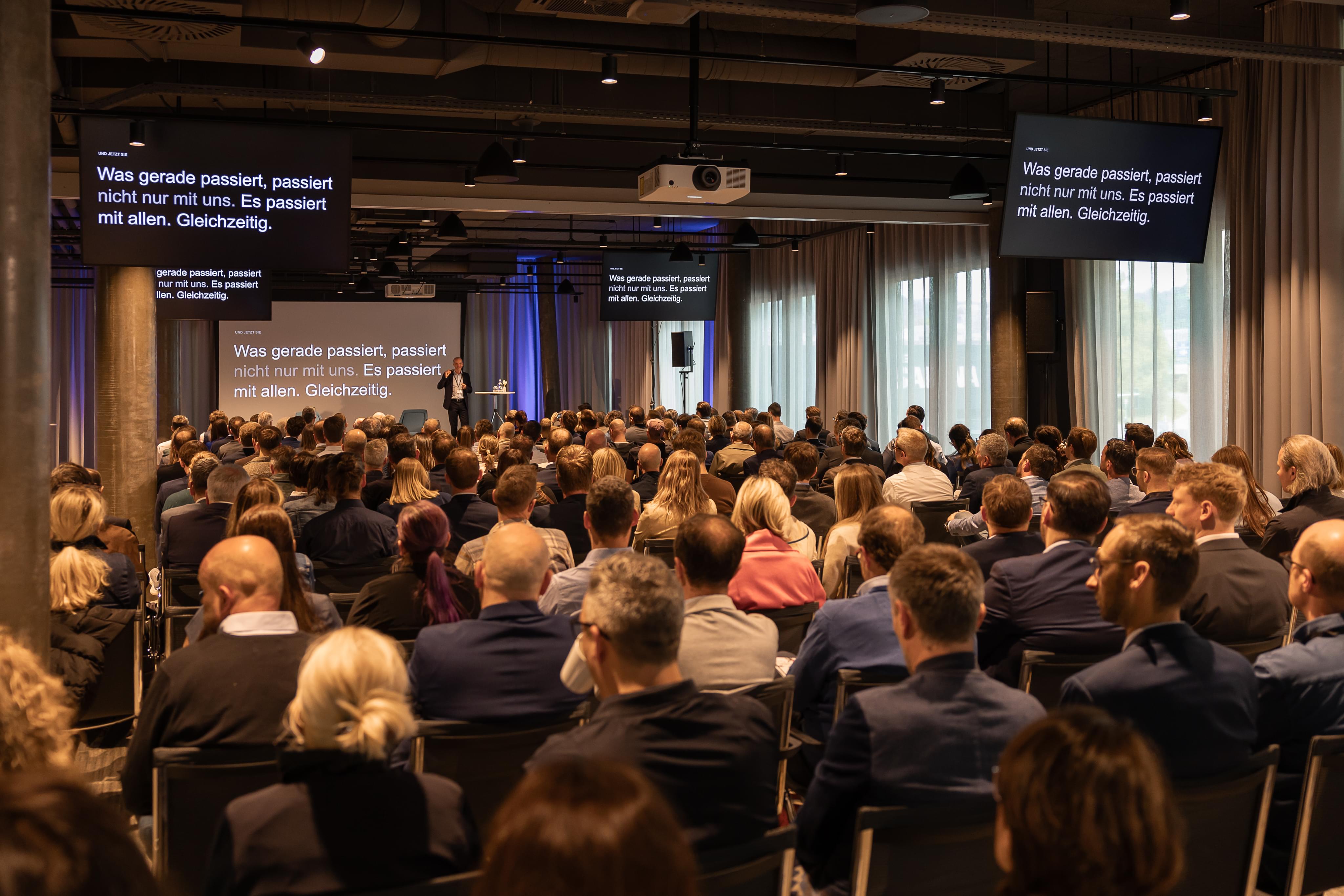
On April 23, over 150 AI enthusiasts from leading Austrian companies gathered at the newly opened QUADRILL in Linz. The occasion? Our AI Symposium that provided an honest, in-depth examination of what AI means for businesses, for entire industries, and for us as people.
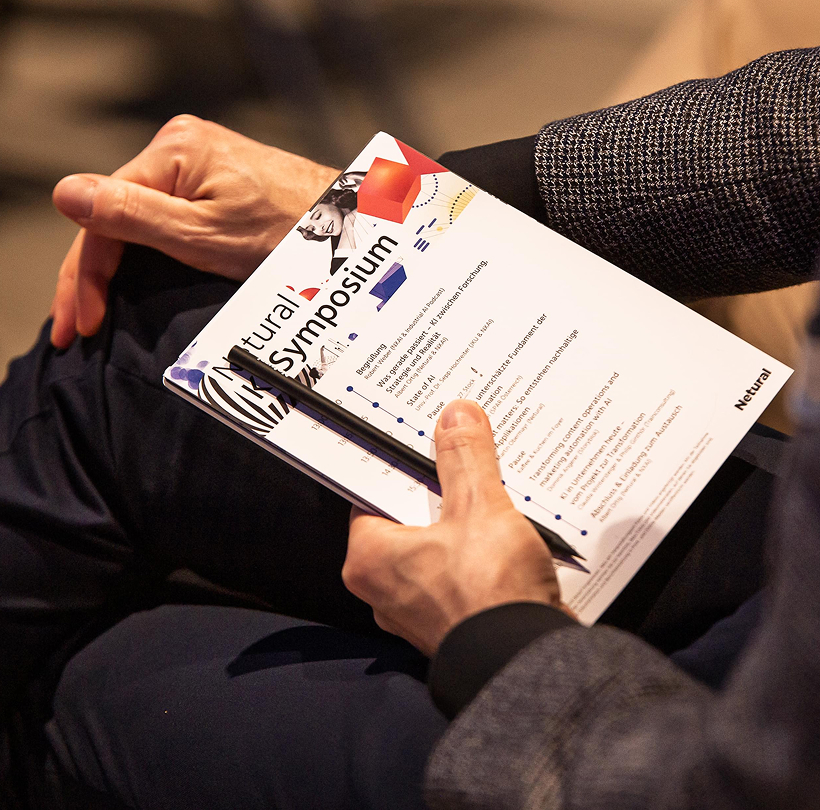
Moderator Robert Weber, best known for his Industrial AI Podcast, guided us throughout a day that spun the full spectrum – from research through data and applications to organisational transformation.
This review focuses on the first two talks: "What is happening right now – AI between research, strategy and reality" by Albert Ortig, CEO of Netural and NXAI, and the "State of AI" dialog with Prof. Dr. Sepp Hochreiter, Chief Scientist and Co-Founder of NXAI and Head of the Institute for Machine Learning at Johannes Kepler University.
But first, let's take a moment to watch our brief recap video.
Want to experience the talks in their entirety? The complete recording of the Netural AI Symposium can be found here.
What is happening right now – AI between research, strategy and reality | Albert Ortig
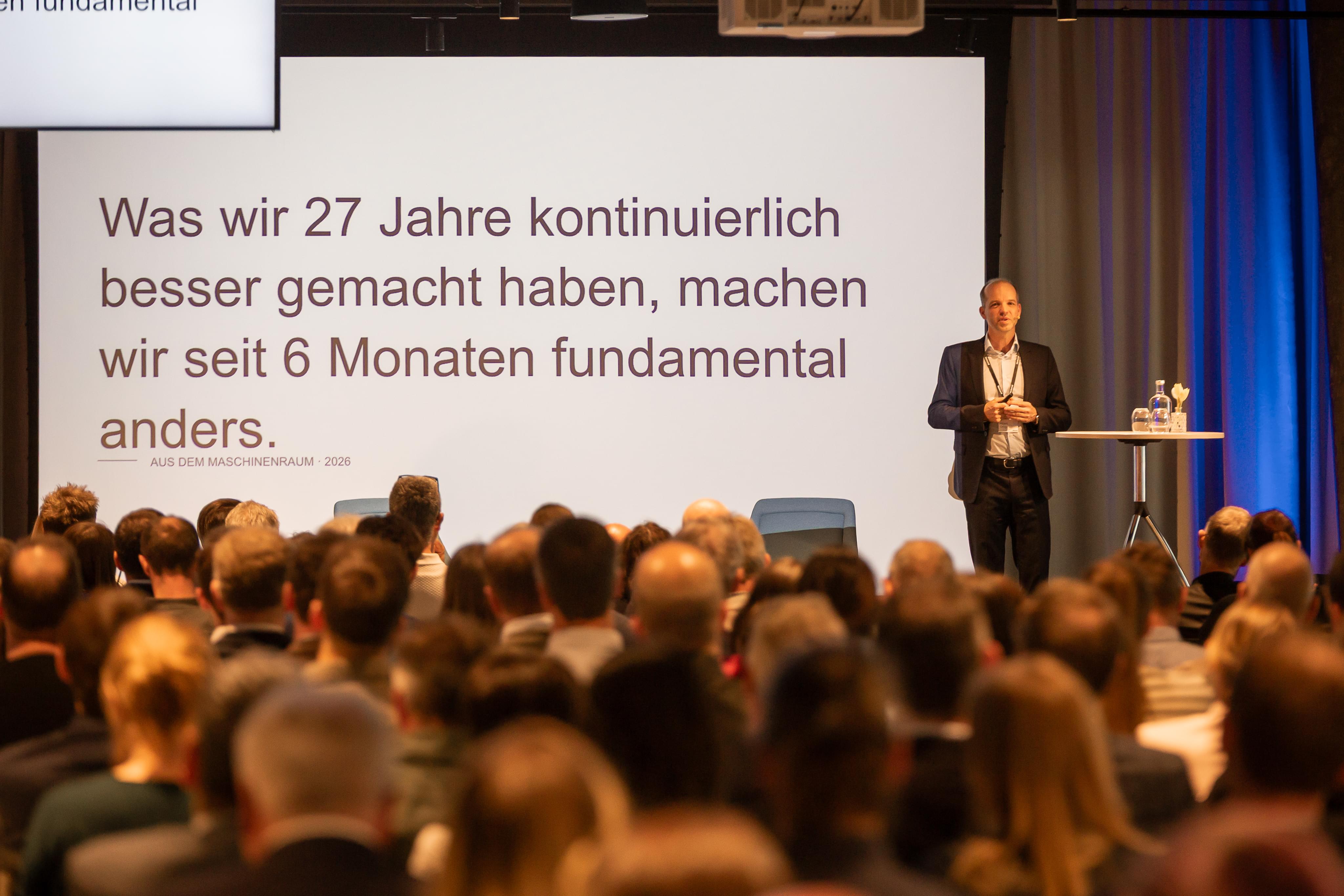
For 27 years, Netural has guided major organisations through their digital transformation. Yet over the past six months or so, Albert Ortig observed that something has shifted fundamentally. AI is quickly changing how we work – it is reshaping processes, roles, and entire job profiles. And this shift affects everyone: public and private enterprises, large and small alike.
This also means that AI has ceased to be a purely technical consideration. It is now a profoundly strategic one. The central question every organisation must confront is this: how does one keep pace – not only technologically, but organisationally – in an environment where the tools themselves evolve almost weekly? Technology can be procured. Data can be built up. But an organisation capable of matching the velocity of this transformation cannot simply be ordered in. It must be cultivated proactively.
The benefits of implementing AI successfully speak for themselves: A developer who commands both their domain expertise and AI capabilities can, according to Albert Ortig, achieve a productivity multiplier of up to 50. He illustrated this with the example of Roomle, who delivered a 3D configuration project – one that had been aspirational for a decade – in a single month, with AI support.
To achieve such results, companies may not fall into the trap of thinking too small about AI. Quality and security remain non-negotiable in an enterprise context. Quick wins and free-tier tools simply do not cut it. Many executives also still associate AI primarily with browser-based tools for language and concept generation like ChatGPT, Claude, Gemini & Co. But particularly in industrial settings, the lens must be widened. Physical AI, or AI embedded directly into machinery, represents enormous untapped potential.
Furthermore, European organisations must seriously consider a contingency plan should access to American or Chinese AI infrastructure ever become restricted – whether through export controls on Nvidia chips or politically motivated limitations on cloud services. The first companies are already asking for European digital sovereignty – and rightly so.

State of AI | Univ.-Prof. Dr. Sepp Hochreiter
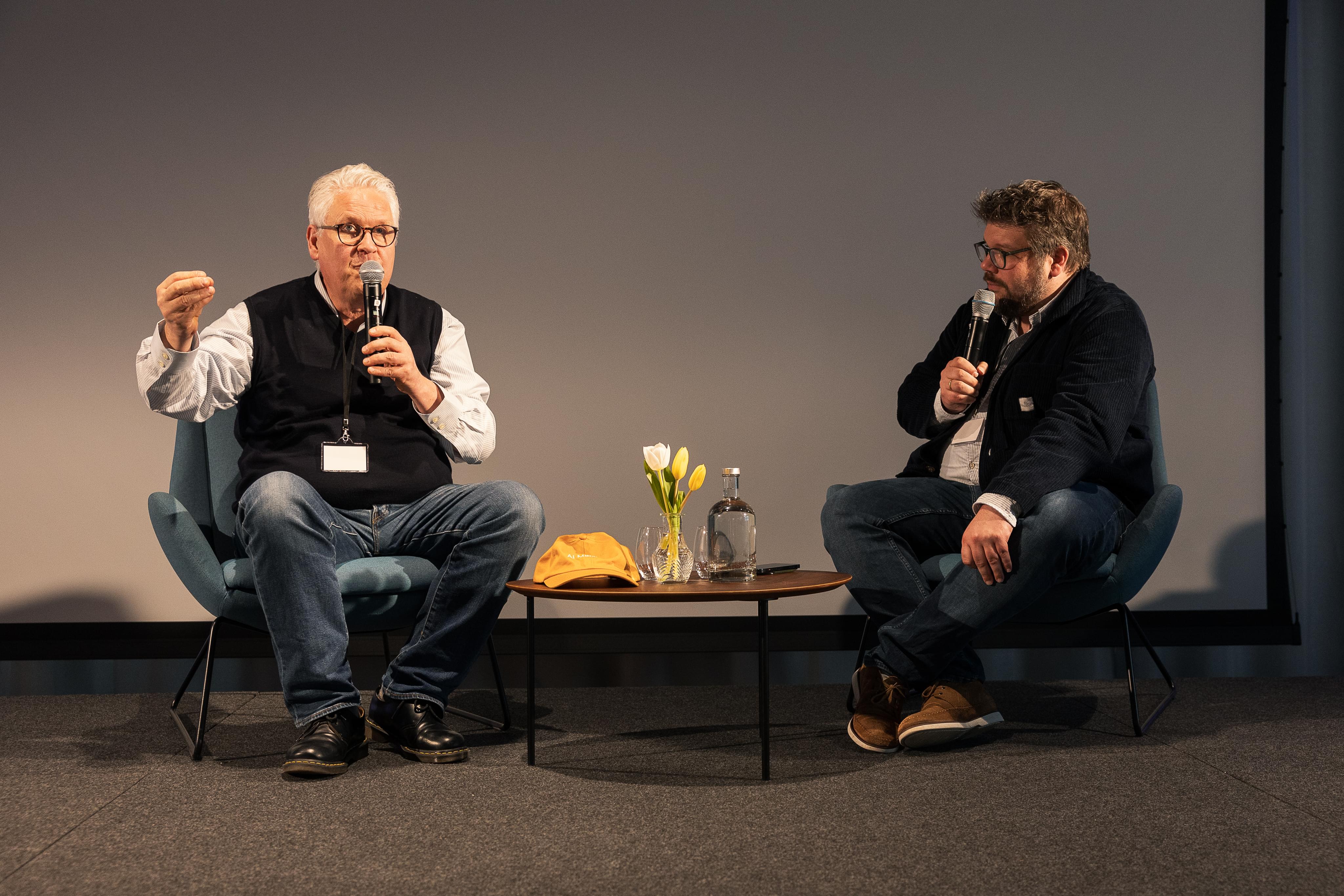
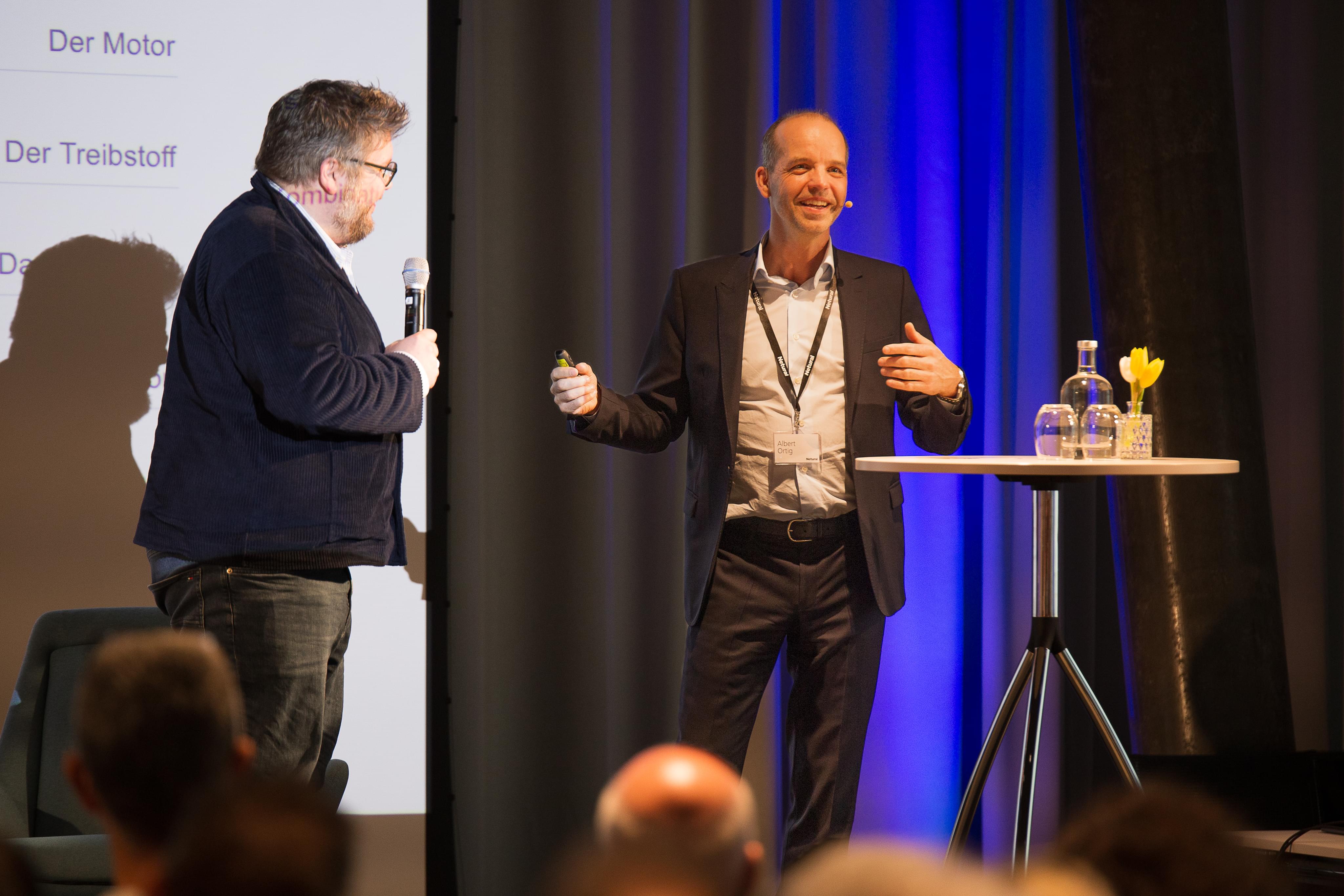
Few people bring the subject of AI research to the stage with as much charm and accessibility as Univ.-Prof. Dr. Sepp Hochreiter, Chief Scientist at NXAI and Director of the Institute for Machine Learning at Johannes Kepler University Linz. His conversation with moderator Robert Weber was among the highlights of the day, covering the state of Europe's AI landscape, the advantages of xLSTM, and TiRex – NXAI's foundation model for time-series forecasting.
AI has become the defining subject of our era. Yet whilst American AI companies are bringing their solutions to market aggressively and at pace, the German-speaking world is frequently held back by regulation, standards and compliance frameworks. This is particularly striking given that many of the foundational advances in AI and machine learning originated in European research. Europe's weakness when it comes to AI, lies not in intellectual capability but in the execution. Compounding this, many large European corporations rely on third-party APIs rather than investing in new AI concepts and deep tech. The result is AI solutions that are quick to deploy but rarely transformative in terms of productivity – particularly in an industrial context. TiRex offers a compelling alternative.
What large language models do for text, TiRex does for machines. It has been trained across an exceptionally broad range of time-series data spanning all domains – including sensor data, production metrics, weather data, and financial time series. The key advantage: when deployed with a client, the model requires only the beginning of a time series as context to generate predictions – on wear and tear, equipment failure or stock levels. No additional training or large volumes of historical data required. Through such inventory forecasting alone, warehouses stand to save several million euros annually.
NXAI's approach is built on xLSTM, making it linear, fast and energy-efficient. A further advantage is state tracking: the model retains a record of the current system state, enabling more precise forecasting – that is, predicting the next data point based on the trajectory to date. This makes xLSTM particularly well-suited for real-time applications and robotics. Transformer architectures, which are the basis for the majority of American AI models, are ill-suited to many of these use cases: they are memory-intensive, computationally demanding and scale quadratically with context length.
The conclusion? European AI research is excellent, and European models frequently match – or outperform – their American counterparts. Yet the situation remains challenging. American companies are actively recruiting European talent, and no European firm currently rivals Meta, Google or OpenAI in terms of engineering capacity. Patents offer one mechanism for retaining AI advances within Europe. Open-source models, meanwhile, remain indispensable for demonstrating the capability of European solutions to the broader world.
You have questions about implementing AI within your organisation? Do get in touch – we would be delighted to help identify an approach that delivers measurable results.